I want my NFC

Browsing through the April issue of Wired magazine at a book store earlier this week, I stumbled upon a print ad for the Lexus 2013 GS that didn’t have a picture of the car. Featured was a close-up image of the vehicle’s center console with a seemingly intrusive doodle of a phone over the dashboard screen. Looking closely was some body copy that instructed the reader to place their NFC-enabled Android phone close to the NFC tag embedded on the page to experience a demo of what is known as the Lexus Appsuite featuring apps like Bing, OpenTable, iHeartradio, Pandora, Yelp and movietickets.com transforming the car itself into one large mobile device.

This seems to be an advancement from using QR codes in print ads and it speaks to how NFC is making its presence beyond payment systems with which it has had a rather stifling experience so far. And it was not until the widespread adoption of smartphones that we’re seeing a wider canvas of innovation and a much broader opportunity for mobile marketing with NFC.

Briefly investigating where NFC is being put to use threw up some novel and potentially lifestyle-enhancing disruptive uses, below are some of them;

1)      Games: Nokia has  been experimenting with a new class of games for children and adults


2)      Door Security: A company called Lockitron can help you lock and unlock doors using NFC

3)       Place information / Virtual tourist guide:  NFC tags at the exhibits at the museum of London giving users more out of their visit.

4)      Unlocking much more:  BMW is attempting to take NFC a step further by building a car key that unlocks much more than just your car.


What works for NFC is the ease of use and quick reading on devices besides the fact that the user does not need to be hooked on to the internet. One has to just tap their device to invoke a rich experience on their screens ranging from simple check-ins and offers to groundbreaking augmented reality experiences the results of which can reveal a valuable pattern of interactions and data points for each individual customer harnessing the true power of data analysis and optimization of content and marketing programs.
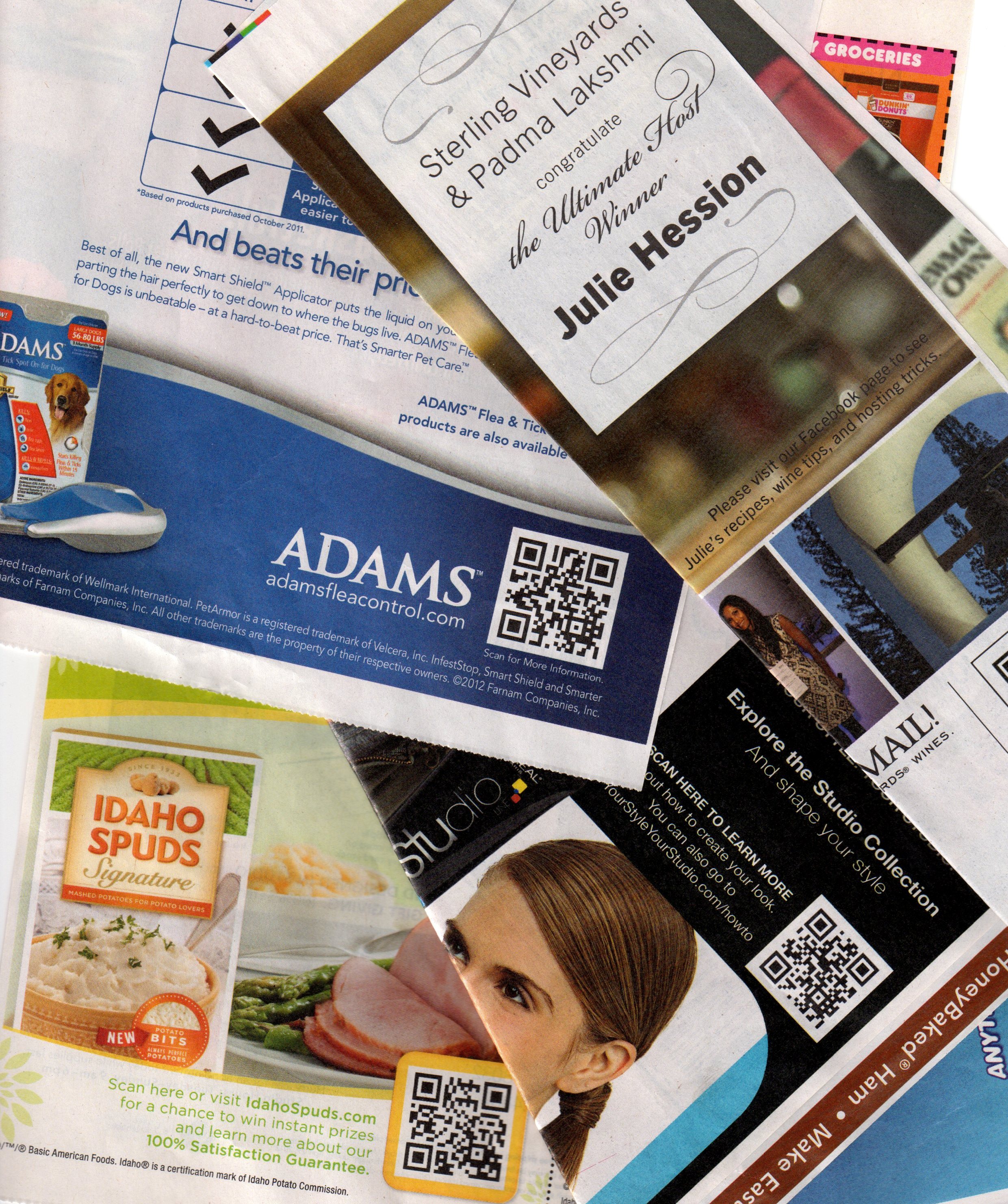
QR codes and grocery coupons

This week I decided to give a second look at something I’ve always ignored. I’m referring to those unrelenting grocery coupons in our mailboxes that never fail to stalk us week after week. The folklore around these is that you can actually swing sweet deals that could save you loads if inclined mathematically enough to sift through the stockpile. Else, they are truly beyond redemption – pun intended.

The discount flyer of every item had a scissor edge perforated section that boldly highlighted the description, value of savings, barcode, and legal terms. But, I was curious to know if these deals integrated the use of mobile phones in any way because the audience that seeks these deals are truly at the last mile of the purchase funnel creating a tremendous opportunity to up-sell by either sweetening the deal, capturing leads, running sweepstakes or giving more information. Looking through coupon catalogs of Safeway, QFC, Rite Aid, and Redplum I found just 4 products from the Redplum lot that had QR codes. They were Julie Hession (Wines), L’Oreal (Studio Gel), Adams (Pet flea control), Idaho Spuds (CPG – Mashed potatoes)

Scanning these QR codes was a disappointing experience, to say the least, except in the case of Adams. I’ll briefly encapsulate the experience below:

Julie Hession (Wines): This QR code promised something and did not live up to it. Being redirected to the products Facebook there was no sign of Padma Lakshmi (as the QR code had promised) nor any quality information about Sterling Vineyards besides a Facebook Wall with self-serving posts. I think an opportunity to truly engage with the customer was waived here.

L’Oreal (Studio Gel): This QR code takes you to an abridged (not mobile optimized) front-page version of the original website which had embedded flash video links that did not function. Being a styling product, the mobile website desperately needs some stylish headshots and a design that is optimized for the medium. This could’ve been the point where customers have the opportunity to interact with the brand. Consider an application that allows them to upload a picture of their own and try various hairstyles with a recommendation of the ideal gel, thereby providing a richer experience.

Idaho Spuds: The call to action on the QR code promised instant prizes but the procedure that followed was anything but instant. The first prize was a trip to New York which was enticing enough for me to participate. However, the data capture form was troublesome and one of the fields (State) did not work making the effort put in futile. I wonder if ‘try your customer’s patience’ is part of the company’s credo.

Adams (Pet flea control): The QR code takes you to the mobile website where browsing is an absolute breeze with seamless navigation, great color scheme, and very well optimized for the medium in layout, type and font, product display and visual language.

Coupons are last-mile tactics to accelerate conversion. If QR codes provide information that’s useful, clear messaging, and offer something that will augment the brand experience they could work. If not, let the inserts single-mindedly do the job they are meant to do – Convert.